Lift Yourself: Precy Babalola talks confidence, self-determination and lasting change
PICTURED: Precy Babalola, a lawyer and Rotarian, rehearses a speech during a visit to a polio project in Nigeria. (Photo: Monika Lozinska)
The wife of Rotary International President Yinka Babalola, Precy has her own lifelong connection to Rotary. From empowering communities in the Niger Delta to presenting behind podiums across the globe, Precy’s belief in herself has helped her aid and inspire countless others.
Words: Sarah Atkins. No Borders Rotaract.
If you look through Precy Peacockba Babalola’s Instagram page, you will quickly notice that it isn’t the typical social media platform of a public figure. It’s bursting with life, dance, laughter and an effervescent use of colour.
A trio of videos from earlier in the year show Precy and then RI President-elect Yinka dancing with fellow Rotarians, teaching them new moves and laughing uproariously. ‘Be special. Be yourself.’ one quote reads. ‘A woman whose confidence is effortless and whose drive is undeniable.’ These insights sit easily alongside distinguished professional images of Precy in her barrister’s court dress, framing her as a Rotarian who takes duty seriously, but who also knows the importance of joy.
Precy is from the Rivers State, Nigeria. She completed a Bachelors in Education and an undergraduate law degree in Port Harcourt before attending Nigerian Law School and passing the bar. Her list of accomplishments within Rotary is extensive, and together she and her husband are a driving force for change.
On 4 June, Rotary Down Under had the special privilege of sitting down with Precy – via an exclusive live Zoom event hosted by Rotary District 9685 Governor Michele Ellery – to discuss the year ahead for her and Yinka, and the values they want to carry into it. Partners of Rotary International presidents aren’t obligated to take on specific roles, but in this case, Precy’s involvement goes without saying. She and Yinka met as Rotaractors, work wonderfully as a team, and have a shared passion for the importance of sustainable aid.
“Anything we do, it has to be around that,” says Precy. “It forms the basis of the Rotary theme for this year; we have to create a lasting impact, not just giving aid and letting it slide. It has to be lasting impact.”
This is a signature of Precy’s own work with Rotary, which has revolved around giving people in vulnerable communities the tools and experience needed to maintain their own success. It was an area she was outspoken about as a Rotaractor, and when she became president of the Rotary Club of Port Harcourt Passport in 2021, she couldn’t pass up an opportunity that arose to help a town struck by the aftereffects of COVID-19 in her community.
“After COVID, there was a lot of staying at home. A lot of people were now displaced. They were jobless, they didn’t have a source of livelihood… so my club and the Rotary Club of Hamburg E-connect partnered and came up with an idea to help 250 women and youths.”
The collaboration was as a result of the friendship between Precy and RI Past President Holger Knaack’s wife, Susanne. It was a “lifechanging” project, Holger posted online. “Friendship in Rotary often bears fruit that can change the world.”
True to Precy and Yinka’s mission statement, it went beyond the usual drop-in, drop-out aid.
“We visited and asked them about the things they wanted. The place we are talking of is Obuama in Niger Delta, where they have these crafts they make, which is beads. So, we trained these 250 women in bead making, poultry, fish farming and snail farming, so they were now empowered.”
The Port Harcourt and Hamburg E-connect clubs ensured the project was sustainable by making sure there were facilitators available for each skill, staying with the women and youths until they had mastered the skills and showed that they were also able to teach others. Now, Precy says, “they’re leading their own businesses, training others, and finding a new sense of purpose. The project continues to ripple. It created not just jobs, but confident community leaders.”
Precy makes it very clear that the importance of sustainable aid doesn’t only apply to the aid we give others. Creating lasting impact also relies on the self-improvement and autonomy of Rotarians themselves.
“You have to help yourself,” she says firmly. “Lift yourself.” She points towards the modus operandi of Rotary being philanthropy and skills based, as well as just for volunteering time.
“You need to be actively engaged in something. Some people will tell you that they are so busy they cannot join Rotary, and I tell them, no, Rotary doesn’t need lazy people. Rotary needs people who are busy. So, for the youth coming up, I would advise them to get themselves a meaningful job… any kind of talent you have, try to showcase it.” She emphasises that volunteers create the most meaningful change for others when they also spend time improving themselves.
Asked about her own influences, Precy talks openly about her father, who raised her to hold her own when challenged and stand up for her beliefs.
“I was born into an all-male family. My dad was a disciplinarian to the core… but he was educated. He was an accountant. He instilled that passion and that gift in me, that I have to speak for myself.”
She laughs. “Let me use one cliche from the African province, which says if life gives you bitter leaf, squeeze it and make a rich, flavourful pot of soup with it. So, with time, I had to make sure that I pushed myself and grew up to that.
“In secondary school theatre, they always gave me the strong characters. When we acted the play of Jesus Christ, I was the person that acted as Joseph the carpenter. Even until he died, [my father] was always telling me, you can do it. Go for it, you can do it.”
Whatever project we are doing, it’s not something that will just be swept up with time. We should make sure that it will last.
Precy carried this resolve into university and eventually become the first female president of the college’s Rotaract club. She has held numerous leadership positions, including secretary and vice president of the Shell Club Ladies Wing, facilitator at Rotary International Assembly partners programs, Foundation chair at the Rotary Club of Port Harcourt East, and charter member/vice president of the Rotary Club of Port Harcourt Passport. She and her husband are members of the Arch Klumph Society, and Precy was recently appointed the 2026-27 District Chair for the Diversity Equity and Inclusion Committee.
Alongside all of this, Precy is a proud mother of four, who are the light of her life. Two are now involved in Rotary as well.
“Our first daughter was an Interact charter president when she was in secondary school. Now, she’s a Rotarian. Our second daughter is also a Rotarian.” She laughs again. “Maybe with time, the boys will join Rotary too.”
She addressed the importance of raising both girls and boys to be responsible.
“Most times they tend to look more at the female side… But we’ve come to that point where it has to be both the boy child and girl child, because when you do that to the girl alone, and she’s well groomed, and now she goes to get married to a boy that is badly raised, you put her under pressure.”
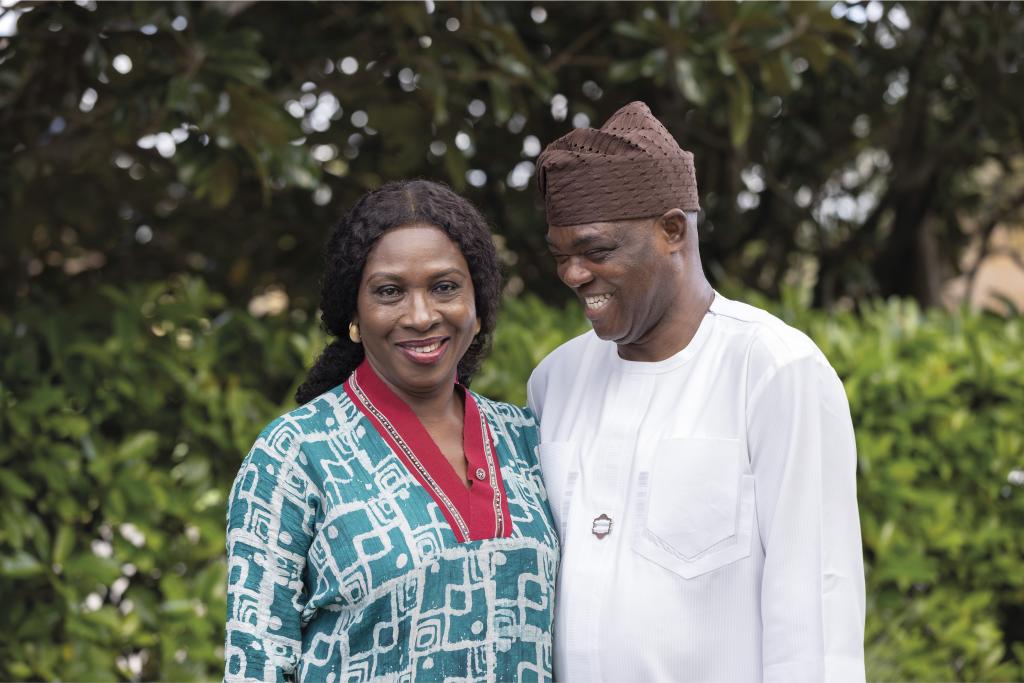
PICTURED: Precy and her husband, Rotary International President Yinka Babalola, a Rotary powerhouse. (Photo: Monika Lozinska)
When asked about how she met Yinka, Precy smiles widely. “It was when I was in university, my second year to be precise. I was at the Rotary offices. Yinka came to visit…. he had this notepad with him. After we greeted, he gave me the notebook to fill in. It had a place where you put your hobby, your birthday, and all and then we went our various ways. Then my club had a picnic invitation from his club. So, when we went, behold, he was there too.”
In a recent interview with Rotary magazine, Yinka gave his side of the same story. He had seen her from afar at an event and pointed her out to a friend. “That’s the one,” he had said.
Looking back at Precy’s Instagram pictures, where she presents at Rotary functions with her signature confidence and show-stopping outfits, you can see what he meant.
Ultimately, though, Precy’s message is that it isn’t about the spotlight. She wants to bring attention back to the work that needs to be done on the ground, in your immediate community, as soon as you possibly can. Local families that desperately need safe water. Struggling workers who need investments of equipment and skills.
“Community economic development is my go-to. When you take projects to a remote area and you see the smiles on their face, they are so happy. Water projects in places that have bad water… When you go to sink a borehole there, do you know how it feels when they see clean water?
“When there are health centres and the right people are there, they make sure they talk to the women, make sure they know to space their babies. And when a woman spaces children, she’s also able to take care of herself.
“So, when you talk of doing projects in remote areas, I think that is the place for me. I feel this should be the first priority. Go into these places where they do not have water, where they lack a lot of things, and make sure they are not left alone.”
Precy concludes by returning to their vision statement of creating sustainable aid. Empowering communities, she reiterates, to look after themselves and their infrastructure.
“I think that will be my happiness,” she says. “That whatever project we are doing, it’s not something that will just be swept up with time. We should make sure that it will last.”



Related news
Bharat Pandya selected as 2028-29 Rotary International President
Surgeon and Rotary leader Bharat Pandya has just been nominated as Rotary International president for 2028-29.
Answering the call
From Rotaractor to Rotary International President, Yinka Babalola's inspiring journey is creating lasting impact.
Building peace from the ground up
Refugee-turned Rotary Peace Fellow leads water and dialogue project reducing disease and conflict in S Sudan.