PolioPlus: Rotary’s boldest bet and ultimate legacy
PICTURED: Photo: Wakil Kohsar / AFP.
Rotary’s fight to end polio is nearing its most critical test yet – a final push to finish what began in 1985, protecting every child and ensuring the legacy of PolioPlus endures long after the virus is gone.
WORDS Amanda Wendt. Rotary Foundation End Polio Now Coordinator.
When Afia* knocks on a door in southern Afghanistan, a mother answers. In her community, only women may enter a home. Afia, 19, carries a blue cooler and a register. Two drops later, a child’s future tilts. She is one of tens of thousands of female vaccinators we help support, who make the difference between ‘almost’ and ‘done’.
In 1985, Rotary made an audacious promise: to end polio. Back then, the virus paralysed around 350,000 children every year across 125 countries. Today, thanks to the Global Polio Eradication Initiative (GPEI), which Rotary helped launch, cases have dropped by 99.9 per cent and wild poliovirus remains endemic in only Afghanistan and Pakistan.
Our achievements to date are nothing short of extraordinary.
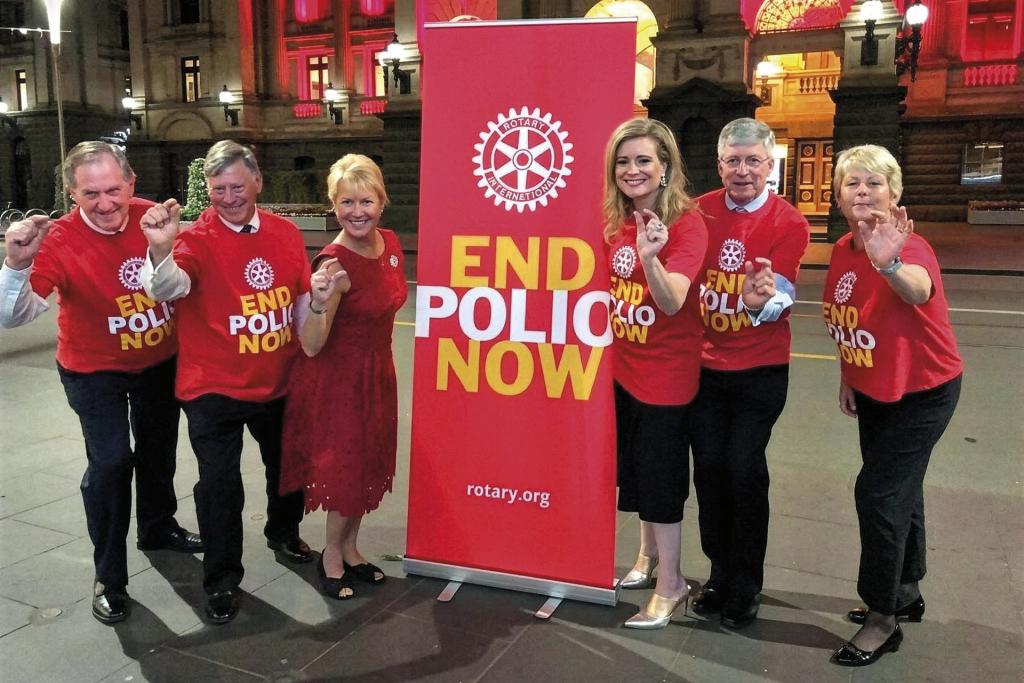
PICTURED: EPNC Murray Verso, TRF Trustee Dennis Shore, TRF Trustee Jennifer Jones, EPNC Amanda Wendt, Past President of the Rotary Club of Melbourne Robert Fisher and PDG Bronwyn Stevens at the 2023 Rotary International Convention in Melbourne.
But this is just where our legacy starts. PolioPlus is more than two drops. The eradication infrastructure – surveillance labs, trained community workers like Afia, trusted local leaders – now does double duty, from measles campaigns to COVID-19 response. Our investment is credited with preventing around 20 million cases of paralysis and saving more than 1.5 million lives, including through vitamin A and other vaccines and supplements, delivered alongside the polio vaccine. Our trusted workers are also delivering clean water, nutrition and health education.
The ‘plus’ will outlast the virus and be our ultimate gift to the children and world.
The ‘plus’ is the part of the story we don’t tell loudly enough and it’s time we did.
The hardest mile
For all the lives saved and systems strengthened, the truth is that eradication is binary. It’s finished, or it isn’t. And there are headwinds in the final stretch.
Routine immunisation hasn’t fully rebounded since the pandemic; global DTP3 coverage (the ‘gold standard’ measure of how well a country’s immunisation system is functioning) sat at 85 per cent in 2024, and agencies warn of rising outbreaks where services and confidence falter. Coverage here remains high by global standards but is slipping. As of the year to June 2025, only 91.63 per cent of Australian one-year-olds are fully immunised, with local pockets sitting far lower. In New Zealand, 83.4 per cent of one-year-olds were fully immunised in the year to March 2025.
In 2024, Gaza recorded its first polio case in a quarter century and then delivered a multi-round vaccination blitz for more than one million children in a war zone. In Papua New Guinea, circulating vaccine-derived poliovirus was confirmed in 2025, and in late August the first paralytic case was confirmed in a four-year-old boy from Lae, triggering a nationwide emergency response on our doorstep. Pakistan is again under intense pressure, with more than 20 cases so far this year and repeated nationwide drives targeting over 45 million children. Health workers and police escorts are still being attacked for doing this work. Financing is also under strain, with uncertainty about future support from traditional funding sources.
History is watching
These realities don’t make our bold, audacious promise impossible, they make it urgent.
Our GPEI partnership model is not just a campaign strategy, it’s the largest public/private health collaboration in history and it’s scaling our vision. In June, Rotary and the Gates Foundation also renewed a US$450 million joint commitment over three years, continuing the 2-for-1 match that triples every dollar Rotarians raise.
We already have proof we can do hard things. India, once seen as the toughest terrain, was certified polio-free in 2014. Africa followed in 2020, despite conflict and remoteness. Those milestones show the way our partnership model mobilises, coordinates and persists, and can beat geography, politics and misinformation.
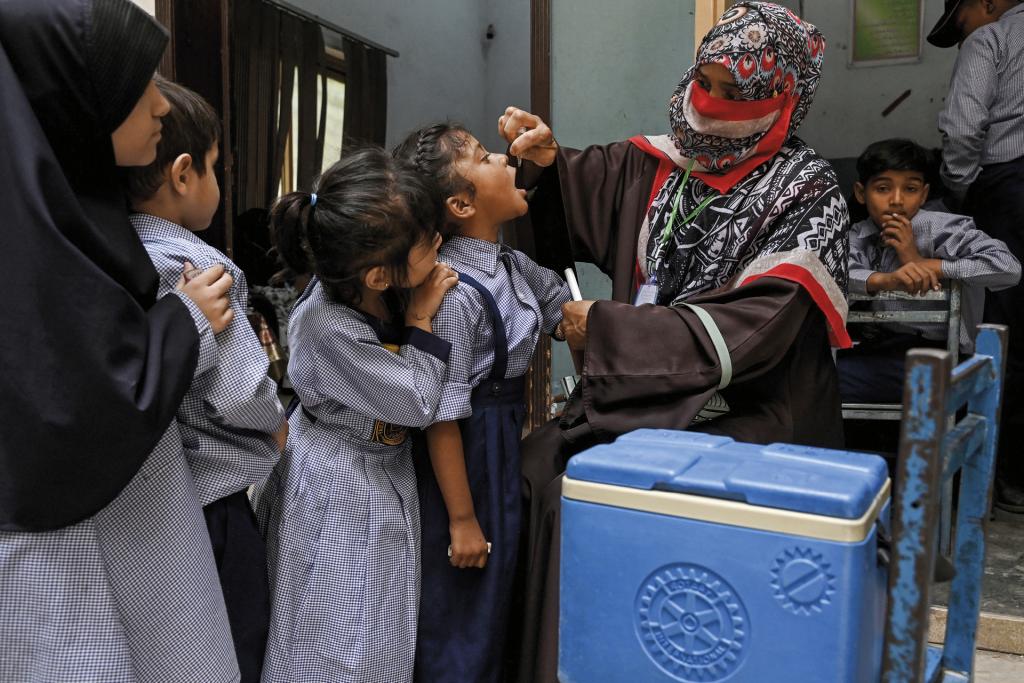
PICTURED: Photo: Arif ALI / AFP.
Your part in the promise
The latest PNG outbreak shows the finish line overseas is tied to our vigilance at home.
Your continued investment in PolioPlus will allow us to close the gaps by funding the plan, restoring routine services, tackling misinformation and making vaccination easy.
When polio is finally gone, the dividend is generational: children walking who would otherwise have lived with preventable paralysis; health systems strengthened for the next crisis; and a blueprint for partnership that outlasts this virus.
*Name per UNICEF profile; identity protected.
What you can do:
- Fund the last mile. Every Rotary dollar raised by districts, clubs and members is tripled by the Gates Foundation – $100 becomes $300 worth of vaccine, surveillance and rapid response.
- Keep polio on the agenda at club meetings. Share both the progress in numbers and the powerful stories of people like Afia*, who are transforming communities with trust and courage. There are terrific short videos you can share on endpolio.org
- Take the message outside your club. Conversations in the community, whether over coffee, at work or on social media, help amplify Rotary’s leadership in the boldest health initiative of our time.

Related news
Clear water, clear minds: Safe water for Timor-Leste
Rotary delivers safe drinking water to schools in Timor-Leste, improving health, learning and resilience.
The optimist
Bill Gates renews commitment with Rotary to end polio, accelerating global health impact over next 20 years.
First-ever school dental clinic opens in Vanuatu
A new Rotary-backed dental clinic opens in Port Vila, delivering free care and brighter smiles for students.