Rotary leads community effort for new Riding for Disabled arena
A major Rotary-led partnership has delivered a transformative covered arena and facility upgrade for Whakatū Riding for Disabled, NZ, ensuring year-round access, improved safety and long-term sustainability for its riders, volunteers and horses.
The completion of a covered arena, staging area and a makeover of the existing infrastructure marks a significant milestone in the Whakatu Group Riding for Disabled’s (WRDA) future – for its staff, volunteers, clients and horses.
“This project was a goal in our 10-year plan but seemed largely beyond our reach because of our lack of familiarity with the regulatory process and a major construction project,” said Immediate Past WRDA President Bill Colgan. “So, it was suggested we approach Rotary for help.
“The Rotary Club of Nelson came aboard and pulled together a project team to scope and deliver the project. They also brought together a network
of contacts, suppliers and contractors committed to delivery.”
‘Project Cover Up’ includes a new 880m2 Durobuilt kitset shelter budgeted at $346,000 (including ancillary works), which has been erected over WRDA’s main arena. It has been funded through WRDA initiated grant applications from Lotto NZ, the RATA Foundation and the NZ Community Trust, plus Rotary-raised funds through Port Nelson charity days and supporters.
Locally, numerous companies, professionals and tradespeople have provided significantly discounted or pro bono assistance, which has ensured the project could be completed on time and under budget. The Nelson City Council, which owns the land WRDA is sited on, has also provided significant support, including through its regulatory arm.
Currently, 10 carefully selected ponies and horses and 61 riders are cared for by two paid coaches and numerous volunteers – and there is a growing waiting list of potential riders. However, 330 individual riding sessions were being lost each year due to hot sun or pouring rain making conditions too difficult for the riders, horses, the coaches and the volunteers.
Some clients live mainly inside and direct sunlight is damaging and unsettling for them. Others are immune-compromised or on medication that requires them to be shielded from the sun or adverse weather. The horses are also affected by sun and rain, as is the riding equipment.
The Rotary Club of Nelson led the development, with support from the Rotary Club of Nelson West. Managing the project from start to finish took 30 months. On Friday 6 March, the arena, plus ancillary work, was officially opened for use.
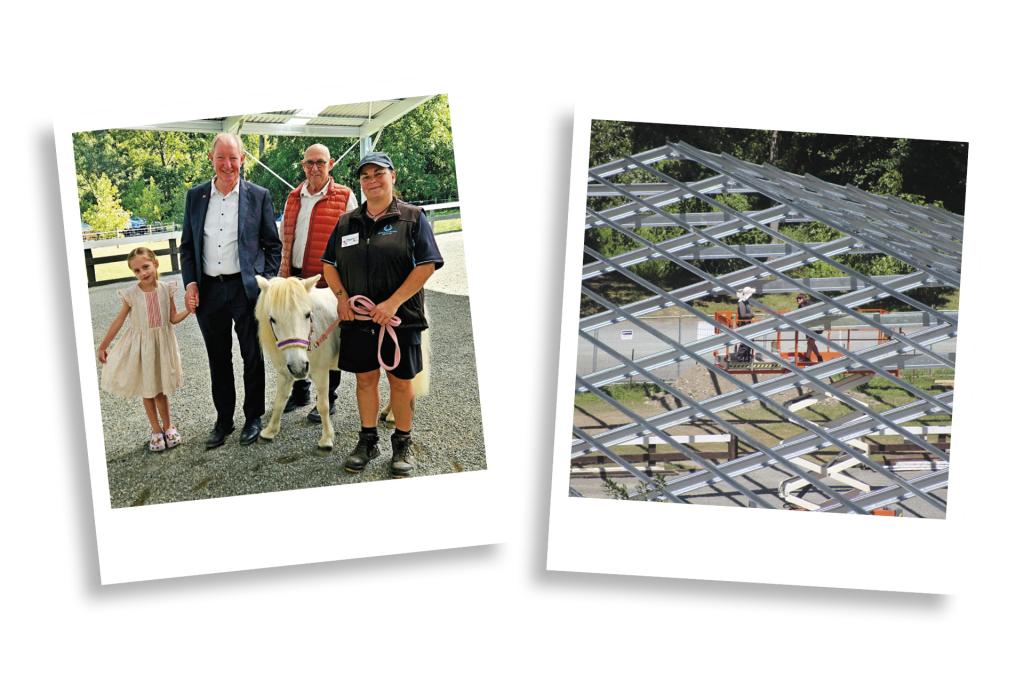
“We were pleased to contribute to the delivery of such a key project for Whakatū Riding for Disabled and one that will secure its viability well into the future,” said Rotary Club of Nelson President Russell Maxwell.
“This was also an opportunity for the Rotary clubs of Nelson and Nelson West, who are exploring an option to amalgamate, to combine their resources for the delivery of such a significant project. WRDA was great to work with and the partnership that has developed is shown in the results.”
Since the inception of the project 30 months ago, some 1,081 hours of voluntary time has been committed by WRDA staff and supporters and Rotary members. This includes fundraising, scoping, design, tendering/negotiation, and delivery of the project.
The savings achieved over the course of the project have allowed the project team to complete a makeover of all the key facilities on the site. Funding has been set aside to provide a roof cover over a spectator deck plus exposed sections of the office deck and mounting platform.
“The savings achieved show the benefit of working in partnership but also demonstrate that the amalgamation of the clubs will provide the scale, skills base and community reach to take on further projects of similar size in the future,” Russell said.
“As we move towards our centenary year, both for the Rotary Club of Nelson and Rotary in the Nelson-Tasman Region, WRDA has been an excellent fit to complement the strong commitment to community and youth development that has been an integral part of Rotary’s objectives over the past 99 years.”
Related news
Rotary’s quiet revolution in mental health and crisis support
A simple QR code connects people with trusted mental health and crisis support at any hour, without judgement.
Our starfish: Relief for Queensland family
Rotary rallied around young Cade, raising $35,283 to support his recovery, treatment and growing independence.
Bare Your Soles for Kids turns 21
Broadwater Southport Rotary's Bare Your Soles for Kids raises a record $25,000 for local children and families.