World Polio Day: Finishing the fight
24 October marks World Polio Day, a time to celebrate one of humanity’s greatest public health achievements while recommitting ourselves to a task not yet complete: the global eradication of polio.
Words: Anne Matthews. D9560 Passport Rotary Club, Qld
For Rotarians around the world, the fight against polio is more than a campaign. It is a promise. Since 1988, Rotary has been at the forefront of the Global Polio Eradication Initiative (GPEI), working alongside governments, international agencies, health workers and communities to protect children from a disease that once paralysed hundreds of thousands every year.
The story of polio eradication is one of remarkable progress. When Rotary first launched its PolioPlus program in 1985, and joined global eradication efforts a few years later, polio was endemic in more than 125 countries, affecting an estimated 350,000 children annually. Today, thanks to sustained international cooperation and the commitment of millions of volunteers, the disease is endemic in only two countries: Afghanistan and Pakistan.
This achievement demonstrates what can happen when organisations, governments and communities unite behind a common goal. Yet it also highlights a crucial reality: until polio is completely eradicated in every country, children all over the world are still at risk.
Polio is a highly infectious viral disease that primarily affects young children. While many infected individuals show few symptoms, the virus can invade the nervous system and cause irreversible paralysis within hours. In some cases, it can be fatal. There is no cure for polio, but it is entirely preventable through vaccination.
This World Polio Day, we can celebrate the extraordinary progress that has brought the world to the threshold of eradication. But celebration must be accompanied by resolve. The final steps are often the hardest and now is not the time to lose focus.
The challenge facing the global health community today is not scientific. Effective vaccines exist and have proven their ability to stop transmission. The remaining barriers are often complex and include conflict, population movement, geographical isolation, misinformation and difficulties accessing vulnerable communities.
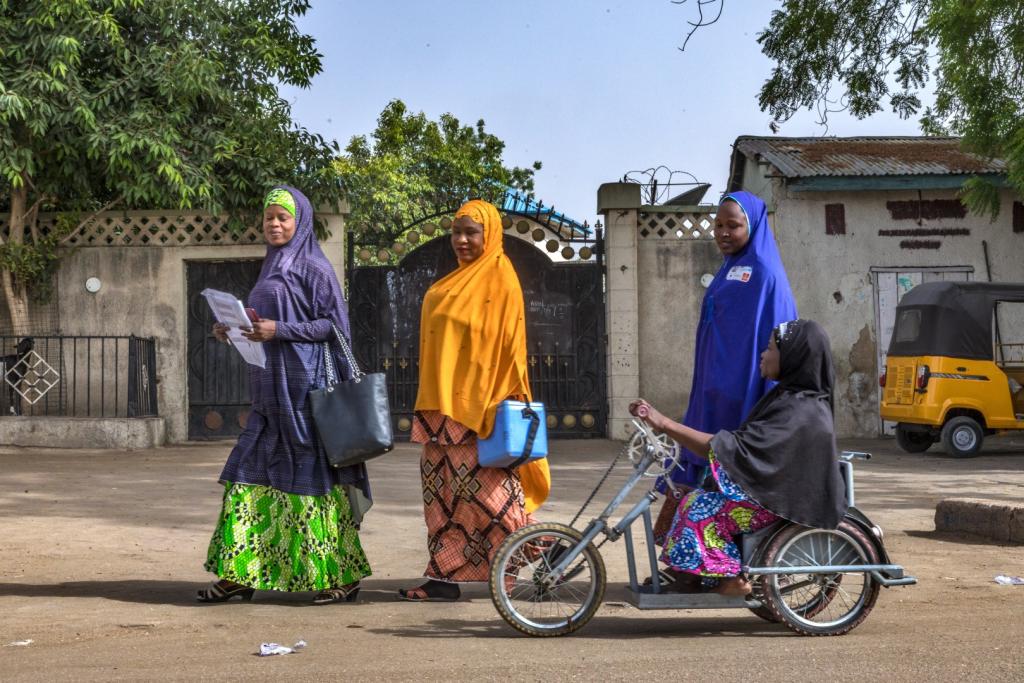
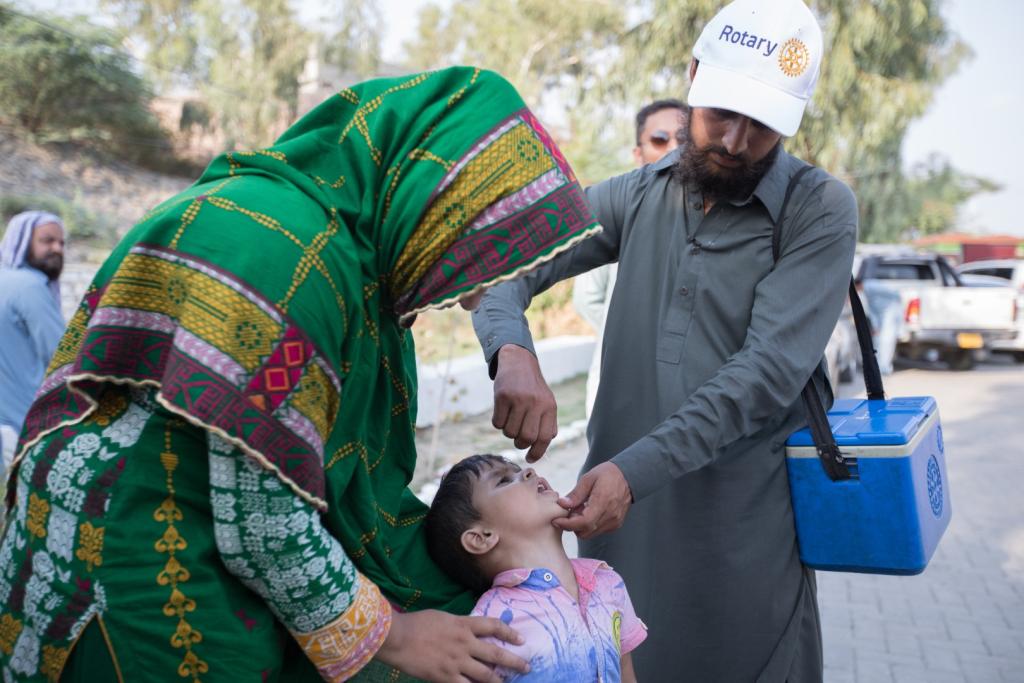
In Afghanistan and Pakistan, dedicated health workers continue to face extraordinary challenges as they deliver vaccines to children in remote and sometimes insecure areas. Their determination serves as a powerful reminder that eradication is not achieved through policy alone. It depends on people willing to work tirelessly, often under difficult circumstances, to ensure every child receives protection.
Rotary’s role remains as important today as it was nearly four decades ago. Rotarians contribute not only financial resources but also advocacy, public awareness, community engagement and volunteer support. Across the world, clubs organise fundraising events, educational campaigns and vaccination awareness activities that help maintain momentum towards eradication.
This effort is strengthened through collaboration. Rotary works in partnership with organisations including the World Health Organisation (WHO), UNICEF, the US Centres for Disease Control and Prevention (CDC), Gavi, the Vaccine Alliance and national governments. Together, these partners form the GPEI, one of the most ambitious and successful public health partnerships in history.
A particularly significant partner in this fight has been the Gates Foundation. Through its long-standing commitment to polio eradication, the Foundation has amplified the impact of Rotary’s fundraising efforts by contributing two dollars for every dollar that Rotary commits to polio eradication activities. This matching arrangement has transformed local fundraising efforts into a powerful global force, enabling vaccinations, surveillance and response programs to reach millions of children.
The partnership also highlights an important lesson: every contribution matters. Whether funds are raised through a major event, a club project, individual donations or by holding a World’s Greatest Meal (https://wgmeal.org/), every dollar helps move the world closer to a future free from polio.
As World Polio Day approaches, it is worth reflecting on what success will mean. Eradication is a rare achievement. To date, smallpox remains the only human disease to have been completely eradicated worldwide. Polio has the potential to become the second. Achieving that goal would save countless lives, prevent lifelong disability, and reduce the long-term costs associated with disease control and treatment.
Perhaps more importantly, it would demonstrate the power of global cooperation. In a world often divided by politics, borders and competing interests, the campaign against polio shows that people can work together across cultures and nations to solve complex challenges.
For Rotarians, the end of polio would represent the fulfilment of a commitment that has spanned generations. It would be the culmination of decades of dedication from club members, volunteers, health workers and supporters, who refused to accept that children should suffer from a preventable disease.
This World Polio Day, we can celebrate the extraordinary progress that has brought the world to the threshold of eradication. But celebration must be accompanied by resolve. The final steps are often the hardest and now is not the time to lose focus.
The world is closer than ever to ending polio forever. With continued commitment, strong partnerships and sustained support from Rotary and its allies, the finish line is within sight. Together, we can ensure that future generations know polio only as a disease confined to history books, never again as a threat to a child’s future.

Related news
Gnomes join the fight against polio
Garden gnomes bring smiles to the Blue Mountains while raising funds to help eradicate polio.
Lions and Rotary unite to help end polio
Stanthorpe Rotary and Lions unite to honour service leaders and raise funds to help end polio worldwide.
The optimist
Bill Gates renews commitment with Rotary to end polio, accelerating global health impact over next 20 years.